
How to Read Your Cat's Body Language
Your cat talks to you all day, not in words but in body language. Their eyes, ears, tail, whiskers, and posture are constantly communicating how they feel.
If they blink at you slowly, they feel trust and affection. If they flatten their ears, they’re probably stressed or afraid. An upright tail means your cat is happy to see you, and pushed-back whiskers might mean they feel defensive. Your cat has a full vocabulary!
Learning your cat’s body language helps you understand their needs and wants. Your cat can let you know when they want attention and when they want space. They can teach you how to strengthen your bond.
In this guide, we explore the key body language signals cats use, how to read them within a specific situation, and how you can best communicate back. You don’t have to speak “cat” to understand your feline friend; you just need to pay attention!
Key Takeaways
- One signal from your cat can mean different things depending on context. Look at the whole picture: your cat’s eyes, ears, tail, and posture.
- Your cat’s eyes and ears reveal mood. Slow blinking signals trust and flattened ears signal fear or stress.
- Your cat is confident and happy when they hold their tail high, and anxious or fearful when they hold it low or tucked between their legs.
- When your cat shows you their belly, they’re conveying trust, but this doesn’t always mean they want it rubbed.
Why Context Matters When Reading Cat Body Language
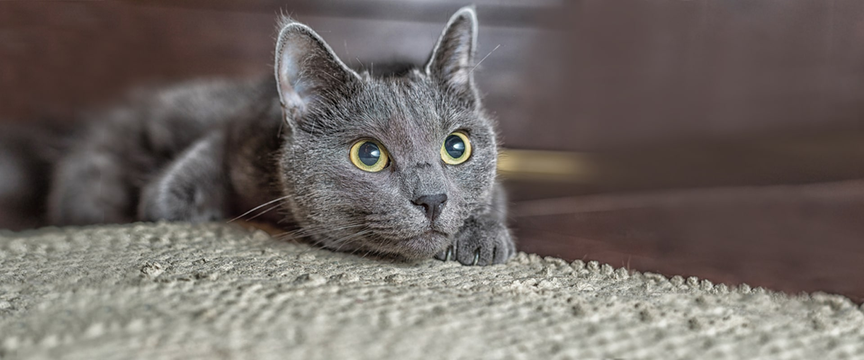
Your cat might look at you one way when they’re happy, but then look at you the same way on a different day when they’re scared. The same body language signals can have different meanings for your kitty depending on the context.
For instance, when your cat’s tail is high, they’re usually telling you they feel confident, but sometimes that same tail position signals getting ready to defend their territory. A different situation changes the meaning of their body language.
When you’re trying to decipher your cat’s message, consider their unique personality, the environment, and the people and animals present. Looking at multiple signals can help you piece together the puzzle.
Table of Contents
Reading Your Cat's Body Language
Your cat is talking to you all the time! But what are they trying to say? Here are some of the most common ways your cat talks to you through body language.
Eyes
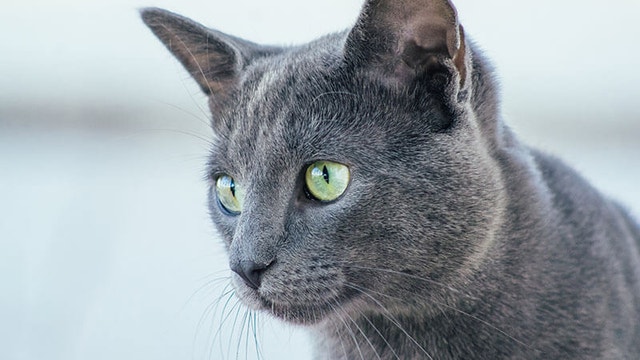
You know when your cat looks at you and slowly blinks their eyes? This often means they trust you! They’re expressing comfort and affection. Similarly, when your cat’s eyes are half closed, they’re telling you they feel safe and content.
When your cat’s pupils are dilated, they may be expressing excitement and playfulness. But this is one of those signals that needs context because it can also convey fear.
If your cat is startled, threatened, or getting ready to challenge someone, their eyes are wide, and their stare is direct.
Ears
Forward-leaning or relaxed ears mean your cat is content or curious. When their ears are pricked up, you know something has caught their attention.
If your cat is feeling anxious or stressed, their ears may go into “airplane” mode, or rotate sideways. And when their ears are flattened all the way back, they probably feel afraid, defensive, or just plain angry.
Tail
Your cat strides by you with their tail sticking straight up, nice and high. What are they feeling? It’s probably clear: confident and happy! But when their tail is low or tucked between their legs, they’re letting you know they feel anxious or frightened.
When their tail is puffed up, like they just stuck their paw in a light socket, they’re instinctively trying to look bigger because they’re afraid. And a flicking or swishing tail tells you your cat is either intensely focused on something or feeling agitated.
Whiskers
Did you know that even the position of your cat’s whiskers can convey information about how they’re feeling? Remarkable and true!
Take a closer look at your cat’s whiskers the next time you and your feline friend are interacting. When their whiskers look relaxed and neutral, your cat is calm and content. When they’re pushed forward, your cat is curious, alert, or in detective mode.
Whiskers fanned out wide mean confidence or high stimulation. And whiskers flattened against the face mean your cat is fearful or feeling defensive.
Body Posture
Your cat’s overall body posture can tell you what they’re feeling, too.
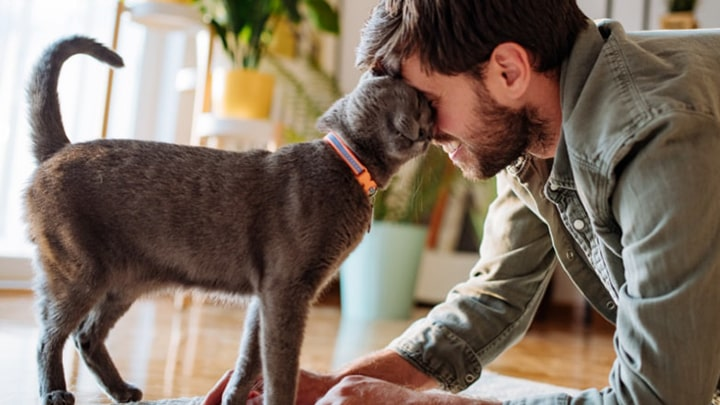
A relaxed cat with their belly exposed is saying, “I trust you.” (But this doesn’t necessarily mean “so go ahead and touch me.”) If your cat rubs against you, they’re showing affection and proclaiming, through scent marking, that you belong to them.
A cat kneading their paws is expressing contentment and comfort, an action deeply embedded from when it was a kitten.
When your cat is crouched low, they’re probably feeling anxious and may be about to flee. And if you see your feline with their back arched and fur raised, they’re feeling frightened and getting into self-defense mode.
Examples of What Your Cat Might Be Telling You
If your cat’s body language could be translated into actual phrases, what would they be saying? Here are our best guesses!
"Oh, hello there."
Ears pricked up, body open, head tilted. Often spotted at the sound of the SHEBA® PERFECT PORTIONS™ package opening, Snap! That’s cat behavior for “You’ve got my attention.”
"You're my person."
When your cat stares at you with a slow blink, they’re telling you how comfortable they are and how deep your bond runs. Translation? “I’m into you.”
"I'm rewarding you with my trust."
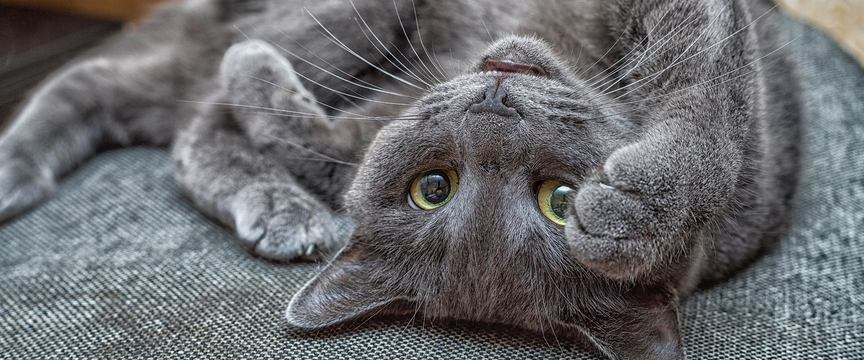
A cat on their back is relaxed and trusting. But, remember, this isn’t necessarily an invitation for a belly rub, though, so use your instincts to discern whether your feline wants further advances.
"Okay, let's play."
Being postured up on their back legs is a sign they’re ready to play. Learn how to play with your cat to deepen your connection.
"I'm proceeding with caution."
A straight, flicking tail coupled with a tense body can mean your cat has heard something concerning. Catch up on cat tail language for more ideas to decipher your cat’s mood.
"I'm not so sure..."
When your cat curls into a ball, they are anxious and trying to get into a less exposed and vulnerable position. The anxiety will probably pass, but if the behavior continues, you should contact your vet.
"Feed me!"
One message your cat won’t let you miss is when they’re ready to eat. When they sit in a still position, often by their bowl, and make direct eye contact, you know they’re ready for mealtime.
"Feline fine."
The perfect moment: Your cat is satisfied and pleased to be around you. After dining on a SHEBA®PERFECT PORTIONS™ meal, it’s time for them to relax with their favorite person.
Understanding Cat Vocalizations

Obviously, your cat can’t speak in human phrases, but they do speak! Cats use a variety of vocalizations and tones to communicate with you.
Purring
When your cat purrs, they’re most likely telling you they’re relaxed. They’re content in whatever moment they're in. But sometimes purring equals stress, feeling sick, or pain. It becomes a way to self-soothe.
Because of these different meanings, always check your cat’s accompanying body language to get the full picture. And take context into account, too. If your cat is purring at the veterinarian’s office, they’re probably not telling you they’re happy!
Meowing
Cats don’t usually meow to communicate with other cats. They meow to talk with us! And they have a lot to say.
Your cat’s meow may mean they’re hungry and want you to hurry up and feed them. Or they might simply be saying “hello.” They could also be trying to tell you they want more attention or don’t feel well.
Frequent meowing may indicate that something’s wrong, but this depends on your cat’s meow patterns. If you know their usual rate of banter, then you’ll recognize when they’re feeling off.
Hissing and Growling
Hissing and growling are pretty easy to translate. Your cat is feeling threatened or afraid. Hissing is often involuntary and triggered by fear or surprise. Growling is a clear statement that your cat wants you (or whoever is upsetting them) to back off.
Don’t try to pick them up or even approach your cat while they’re hissing or growling. Give them time and space to take care of themselves first.
Chirping and Chattering
Cats tend to chirp or chatter at animals they consider prey (like birds and insects). These sweet, funny sounds indicate excitement mixed with frustration. Your cat may be watching a bird out the window and be both mesmerized and chomping at the bit to get at them.
Chirping and chattering are harmless, and they usually mean your cat is engaged in healthy mental stimulation. So enjoy listening in!
Treat Your Cat to Something Special with SHEBA®
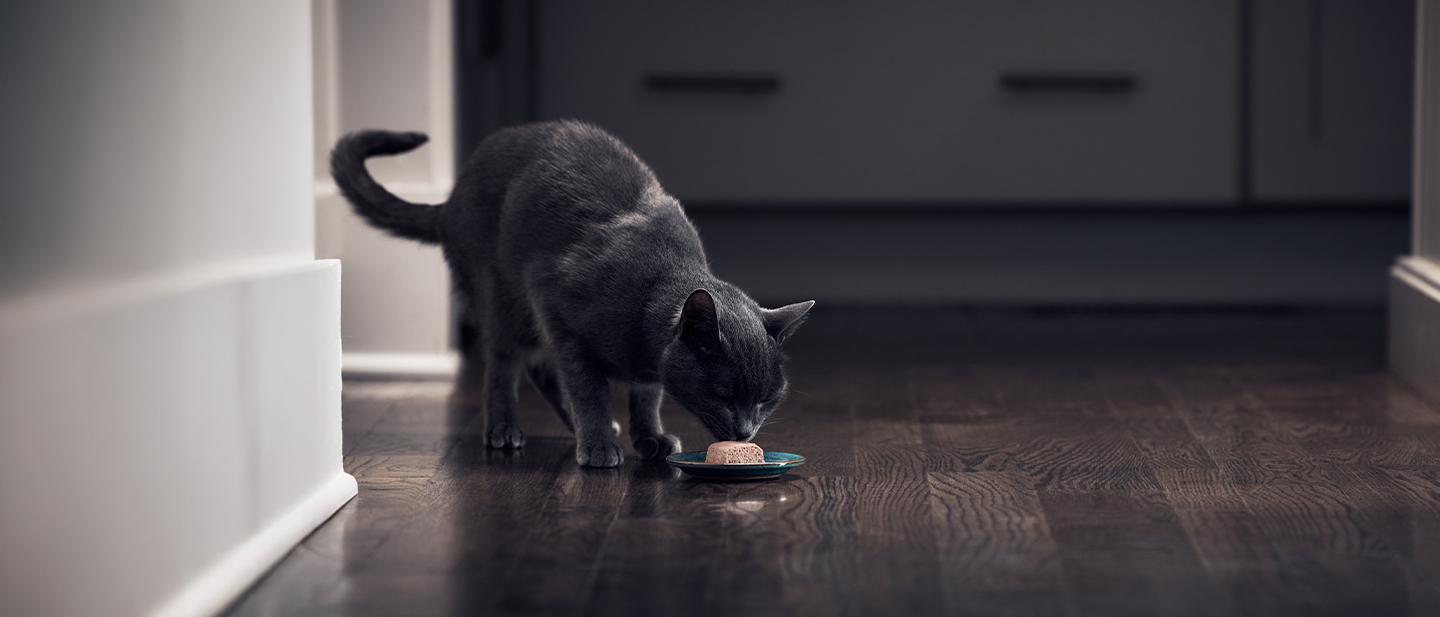
While there’s no program for learning cat “language,” you can pick it up pretty quickly by paying attention to the way your cat moves and positions their body. And once you understand their body language, you can better know when they’re happy, curious, or ready for a treat.
SHEBA® cat treats are crafted with real ingredients and irresistible flavors your cat will love. They’re made with high-quality protein, contain nothing artificial, and come in a variety of textures and flavors to match your cat’s favorites.
Your cat has the choice to lick or chew SHEBA® cat treats, and you can even use them as a topper for their regular meals.
Watch (and listen!) for what your cat is telling you. If they offer that slow blink, rub against your legs, or begin to purr, take the opportunity to bond with them using a delicious SHEBA® treat!
Contributor
Jessica Gilliam is a veterinarian with more than 14 years of clinical experience, specializing in small animal medicine. She is passionate about surgery, dentistry, mentorship, and education. Jessica serves as the Community Chair for the Tennessee Market at Banfield and oversees Mars Petcare’s PetConnect chat, which offers free educational support for pet parents. In her free time, she enjoys hiking and baking.